
Shop
Shop
Filters
Filters
Are you relying on generic "great job" praise that fails to actually change how your team performs?
As part of the Retention, Engagement + Stay Leadership Action Tools (LAT) series, the Recognition Planner is a multi-page, interactive strategic framework designed to turn "saying something nice" into a high-impact leadership habit that reinforces the specific contributions you want to see repeated. This tool helps you move beyond spontaneous compliments to deliver intentional appreciation that connects individual behaviour to your team’s broader mission and values.
This planner helps you:
Pinpoint Impactful Behaviour: Move past vague praise by identifying the specific, observable actions that actually move the needle for your team.
Connect Behaviour to Purpose: Clearly articulate the "why" behind your appreciation, making it obvious how an employee’s effort supports current strategic priorities.
Personalize the Delivery: Adjust the medium and setting of your recognition to match the unique preferences and motivations of each individual, ensuring it lands authentically.
Build Leadership Credibility: Transform isolated moments of appreciation into a sustainable team norm that makes your expectations visible and valued.
Uncover Hidden Drivers: Use recognition as a diagnostic tool to learn what truly motivates your people, allowing you to tailor future 1:1s and development paths.
Best for: Managers looking to build a culture of initiative and ownership; leaders during high-pressure cycles or growth phases; and teams seeking to align appreciation with organizational values.
Do you find yourself waiting for annual reviews to understand why your best people stay, or why they might be considering a move?
As part of the Retention, Engagement + Stay Signals Leadership Action Tools (LAT) series, the Stay Conversation is a multi-page, interactive and proactive leadership tool designed to facilitate open, high-trust dialogue before a resignation is ever on the table. Unlike a formal performance review, this resource focuses on the "staying experience," helping you uncover what keeps your high performers engaged and where their commitment might be vulnerable.
This guide helps you:
Move from Guessing to Gathering Insight: Transition from making assumptions about employee happiness to gathering real-time data through structured, supportive dialogue.
Identify Critical Retention Drivers: Use targeted questions to explore the specific impact of autonomy, mastery, purpose, and recognition on an individual’s daily work.
Clarify "Energy Drains" Early: Create a safe space to discuss friction points and workload concerns before they escalate into disengagement or burnout.
Align Growth with Reality: Bridge the gap between an employee’s career aspirations and the actual opportunities available within your team’s current landscape.
Draft Collaborative Solutions: Move immediately from conversation to action by co-creating specific leadership or environment adjustments tailored to the person’s unique needs.
Harness Long-Term Loyalty: Build a "leadership rhythm" that signals responsiveness, proving to your best people that their growth and satisfaction are a priority.
Best for: Managers and executives who want to secure their talent pipeline; leaders looking to deepen trust with high-potential employees; and organizations seeking to build a resilient, people-centred culture.
When team energy feels "off," do you find yourself trying to "motivate harder" without seeing any real change in behaviour?
As part of the Retention, Engagement + Stay Signals Leadership Action Tools (LAT) series, the Engagement Drivers Audit is a multi-page, interactive diagnostic reflection tool that shifts your focus from trying to "fix" the person to adjusting the conditions of their environment. By evaluating the core drivers of energy—Autonomy, Mastery, Purpose, and Recognition—this audit helps you identify exactly where engagement is eroding before it peaks into burnout.
This audit helps you:
Move Beyond Gut Feelings: Ground your awareness in objective evidence by comparing current observable behaviours against an individual's unique baseline.
Diagnose the Environment: Identify which of the four core drivers is strained so your leadership interventions become surgical rather than generic.
Bridge the Reality Gap: Gain the clarity needed to ensure you and your employee are operating within the same reality before you initiate a check-in.
Customize Your Approach: Assess the level of urgency and tailor your leadership style to address the specific impact the environment is having on a team member's energy.
Prevent Quiet Attrition: Proactively strengthen team conditions to stop the "quiet compounding" of frustration that leads to turnover.
Best for: Leaders managing uneven team energy or navigating major structural shifts; managers who want to move from reactive management to building a resilient team culture.
Do you ever feel a "shift" in a team member’s energy but struggle to pinpoint exactly what has changed until it’s too late?
As part of the Retention, Engagement + Stay Signals Leadership Action Tools (LAT) series, the At-Risk Talent Tracker is a multipage, interactive and structured reflection tool designed to help you catch the "drift" of disengagement before it turns into a resignation. Instead of relying on gut feelings or waiting for performance to slip, this resource provides a private framework to document subtle behavioural patterns, moving you from reactive worry to clear, evidence-based awareness.
This tracker helps you:
Separate Stress from Disengagement: Distinguish between a temporary "heavy season" and a long-term decline in commitment by tracking energy and curiosity over time.
Identify Early Warning Signals: Spot the subtle "softening" of initiative or shifts in tone that often precede a formal exit.
Move Beyond "Gut Instinct": Ground your observations in clear, documented evidence so you can lead future check-ins with confidence and clarity.
Prepare for High-Stakes Conversations: Use your reflections to bridge the gap between your observations and an employee’s reality, ensuring your stay conversations are rooted in curiosity rather than assumption.
Redirect Momentum: Intervene while there is still time to co-create solutions, turning a potential loss into an opportunity to strengthen the employee’s connection to the team.
Best for: Managers who lead high-impact individuals; leaders navigating periods of organizational change; and anyone who wants to develop a disciplined habit of proactive talent advocacy.
Do you ever feel like you only learn an employee is unhappy when their resignation letter lands on your desk?
As part of the Retention, Engagement + Stay Signals Leadership Action Tools (LAT) series, the 30-Day Retention Plan is a multi-page, interactive high-impact leadership tool designed to move you from reactive damage control to proactive intervention. Instead of relying on broad, slow-moving corporate strategies, this resource helps you run a focused, 30-day "experiment" to test specific leadership adjustments that strengthen commitment in real-time.
This plan helps you:
Isolate the Primary Lever: Stop trying to fix everything at once and pinpoint the one driver—such as autonomy or workload—that will have a disproportionate impact on an individual’s decision to stay.
Convert Intention into Behaviour: Shift from "trying to be a better leader" to executing one specific, testable adjustment that proves to your high performers their environment can evolve.
Build an Accountability Rhythm: Use structured midpoint checks and 30-day reviews to ensure your leadership shifts actually take hold and become permanent habits.
Monitor Success Signals: Learn to identify observable shifts in initiative and ownership so you can move from "feeling" things are better to "seeing" the proof.
Close the "Doing Gap": Eliminate the space between knowing there is a risk and taking visible action, building a culture of trust where people feel it is worth staying.
Best for: Managers facing at-risk talent or "tone shifts" in high performers; leaders who want to build a disciplined habit of retention; and organizations looking to reduce avoidable turnover through short-cycle action.
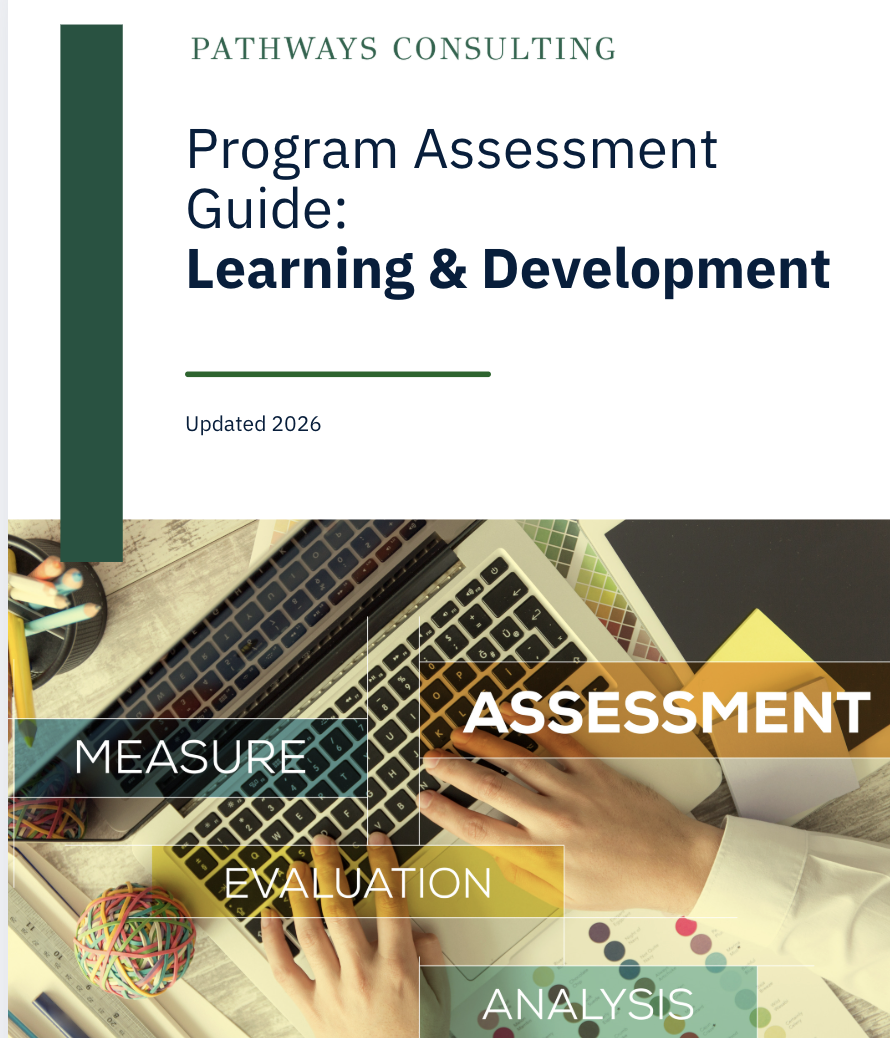
Not sure if your learning and development efforts are actually working or where to focus next?
This 41-page practical, human-centred assessment guide helps organizations take a step back and evaluate their current L&D strategy, programs, and culture of learning. Through guided reflection and structured prompts, you’ll identify what’s working, what’s missing, and where the biggest opportunities for impact exist.
Whether you’re building, refining, or reimagining your L&D approach, this guide gives you clarity and direction and a strong foundation for smarter learning decisions.
Best for: HR leaders, L&D professionals, people leaders, and growing organizations.
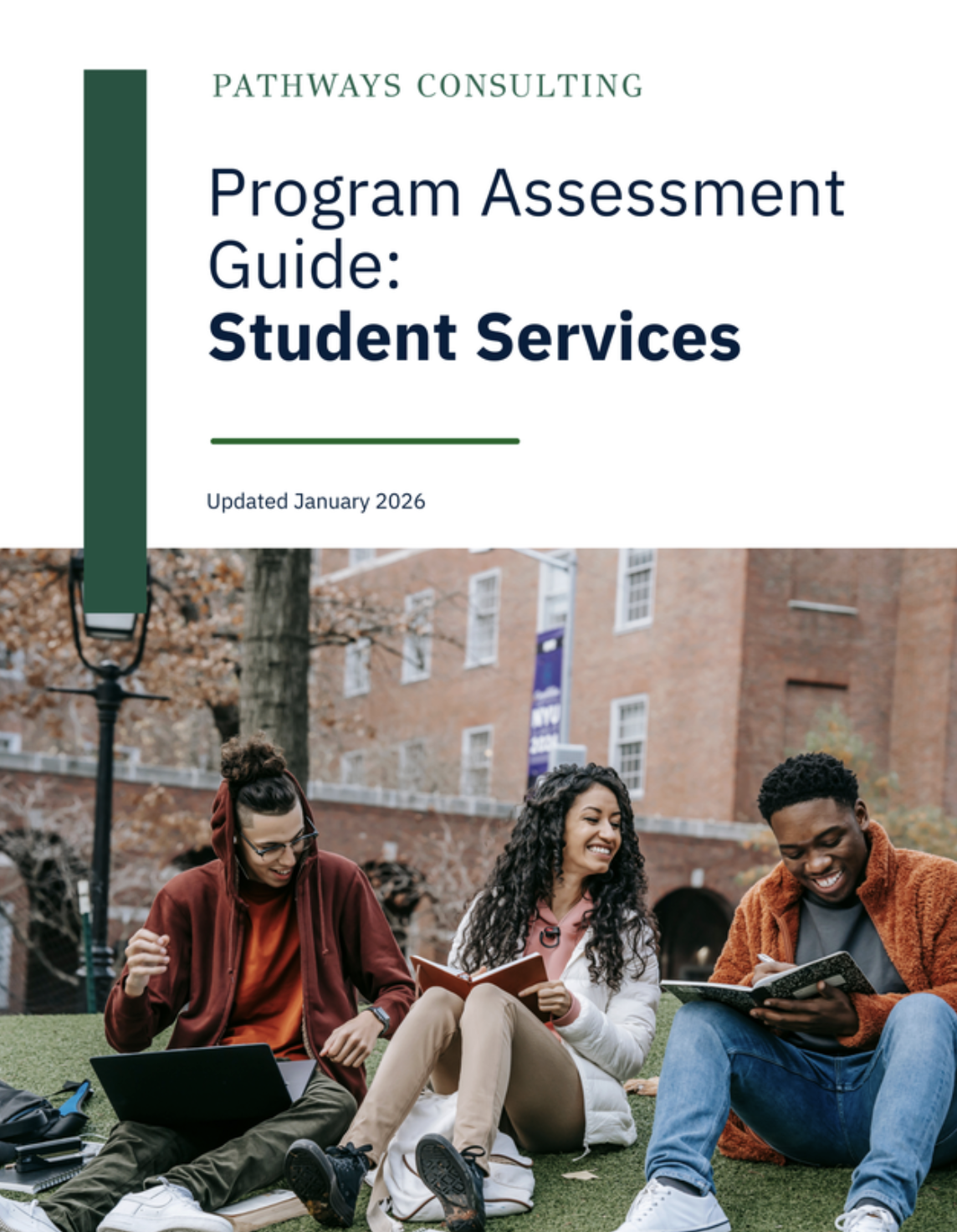
Not sure how effective your student services and programs really are or where to focus next?
This 40-page self-directed, equity-centred program assessment guide helps student affairs and student services professionals take a step back and thoughtfully evaluate their programs, services, and supports. Through guided reflection, practical frameworks, and structured prompts, you’ll identify what’s working, what’s missing, and where the greatest opportunities exist to better support student learning, belonging, and success.
Whether you’re building, refining, or reimagining a program, service, or resource, this guide provides clarity, shared language, and a strong foundation for more intentional, evidence-informed decision-making.
Best for: Student affairs and student services professionals, program coordinators, assessment leads, managers, and cross-functional teams working to strengthen student impact.
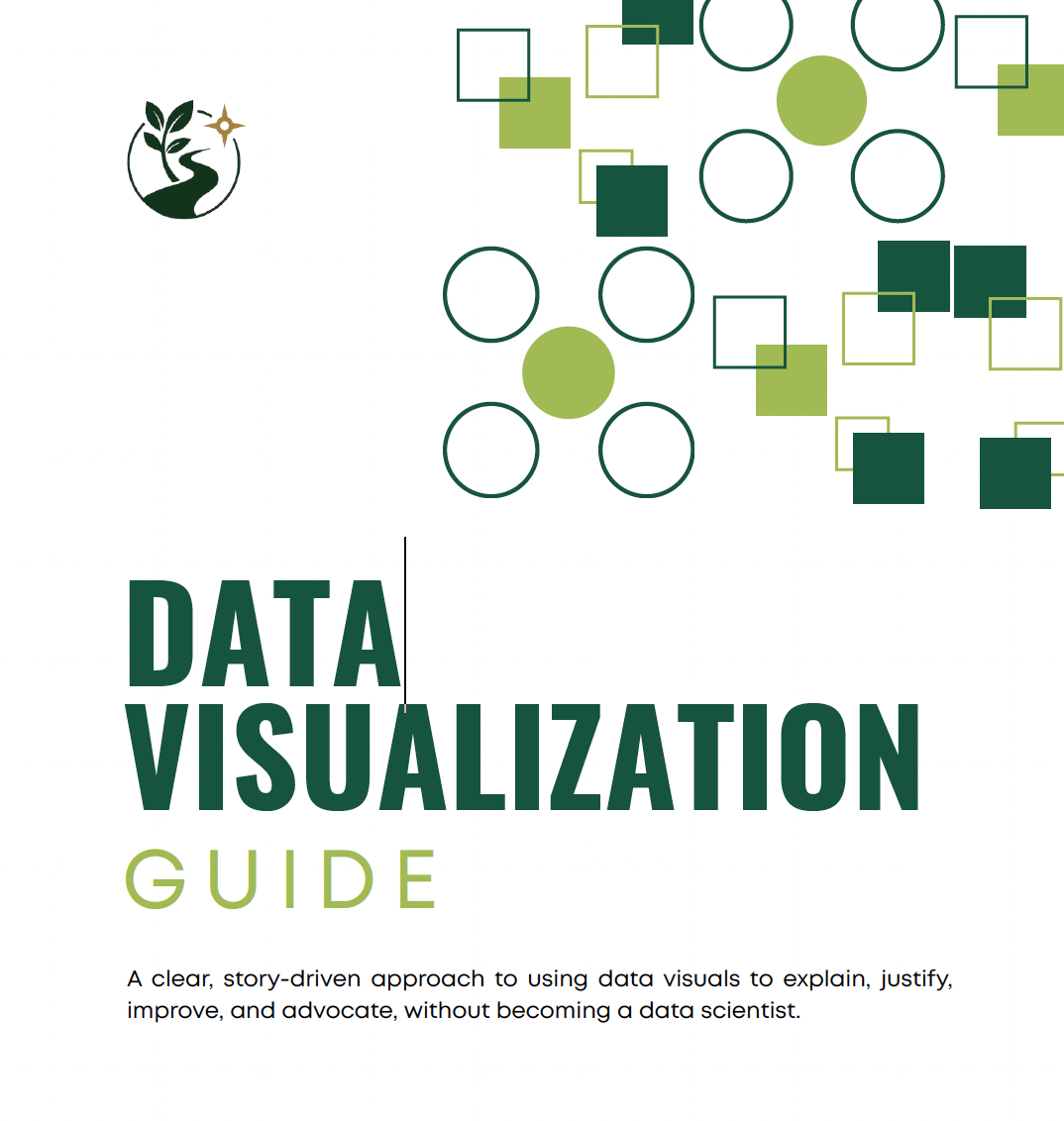
Do you have important data to share but aren’t sure how to turn those numbers into a clear, compelling message?
The Data Visualization Guide is a practical, step-based resource designed for professionals who need to explain, justify, and advocate for their work without becoming a data scientist. This guide moves beyond "making charts look nice" and focuses on the strategic art of communicating insight, progress, and impact.
Rather than teaching complex software or coding, this guide emphasizes clarity and intent. It provides a simple framework to help you identify the "story" within your data—whether that is a change over time, a comparison between groups, or progress toward a critical goal—and choose the visual lens that makes that story stick.
This guide helps you:
Identify the "Why": Move from simply reporting numbers to identifying the specific story your audience needs to hear.
Choose the Right Lens: Navigate multiple analytic approaches to determine if you should focus on composition, distribution, or trends.
Refine for Impact: Learn how small design changes can turn cluttered, default Excel charts into clear, professional visuals.
Build a Shared Language: Utilize a plain-language glossary to communicate data concepts confidently with your team.
Execute with Ease: Apply practical principles that work directly within Excel—no specialized AI or programming required.
Best for: Individual contributors, managers, and executives who need to present data to stakeholders; educators and coaches looking to improve their program reporting; and organizations seeking to build a consistent, data-informed culture.
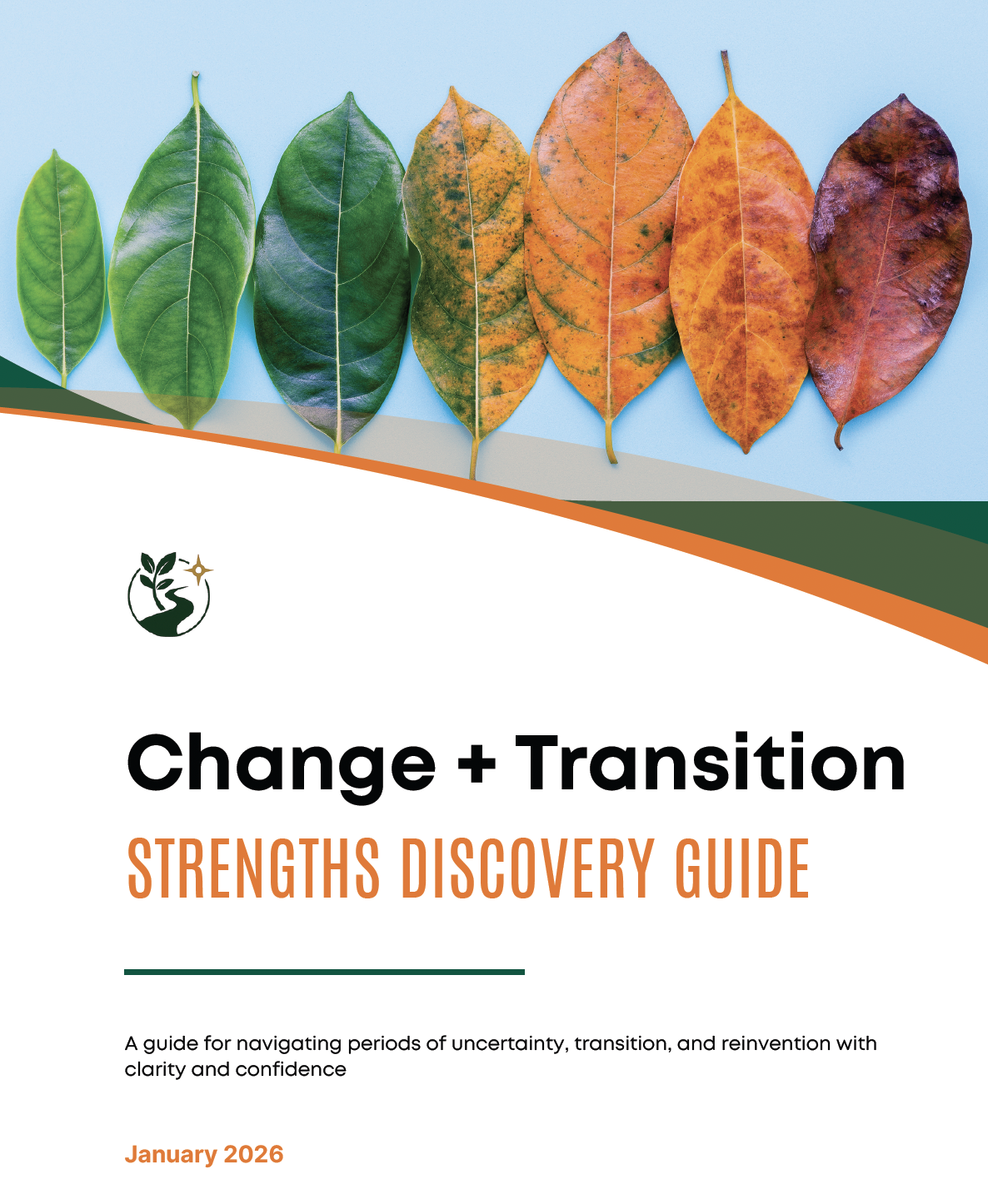
Not sure how to move forward during a period of change—especially when clarity feels incomplete?
The Change + Transition: Strengths Discovery Guide is a self-directed, strengths-based workbook designed to support individuals navigating uncertainty, transition, and reinvention. Grounded in positive psychology and the VIA Character Strengths framework, the guide helps you make sense of what is shifting while staying anchored in what remains steady about who you are.
Rather than rushing toward answers or “fixing” uncertainty, this guide emphasizes reflection, curiosity, and intentional action. Through guided prompts, practical frameworks, and low-pressure experiments, you’ll explore patterns in how you respond to change, identify strengths that support resilience and decision-making, and move forward with greater confidence and self-trust.
This guide helps you:
Make sense of transitions without pressure to have everything figured out
Identify strengths that anchor you during uncertainty and change
Explore direction and decisions through small, realistic experiments
Integrate past experiences to clarify what you want to carry forward
Navigate change with greater clarity, confidence, and alignment
Best for:
Individuals navigating career, life, identity, or role transitions; students and professionals facing uncertainty or reinvention; and educators, coaches, and organizations supporting people through change.
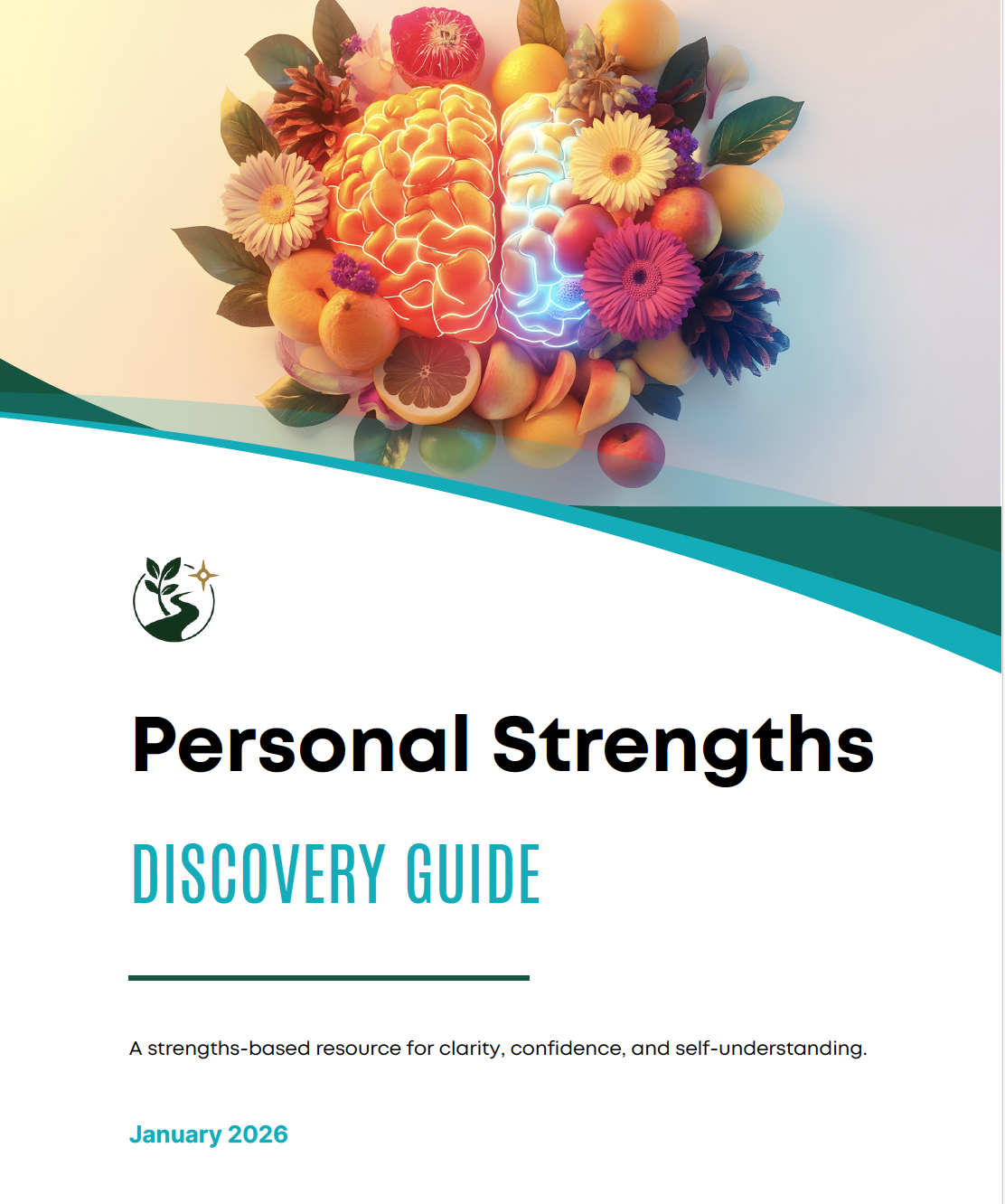
Not sure how to name your strengths, trust what energizes you, or explain what you bring to the table—at work or in life?
This introductory, self-directed Personal Strengths Discovery Guide is a practical, research-informed resource designed to help individuals build clarity, confidence, and self-understanding by starting with what is already working. Grounded in positive psychology and the VIA Character Strengths framework, the guide supports meaningful reflection on values, patterns of thinking and behaviour, and the ways strengths show up across work, learning, relationships, and well-being.
Through guided reflection, strengths-spotting activities, and simple application tools, you’ll develop a shared language for your strengths, notice how they support (and sometimes stretch) you, and learn how to use them more intentionally in everyday life. The guide is flexible, low-pressure, and self-paced—designed to meet you where you are, without requiring perfection or a fixed outcome.
Whether you’re exploring personal growth, career direction, leadership development, or simply seeking better alignment and well-being, this guide offers a strong foundation for intentional choices rooted in who you are at your best.
Best for: Individuals seeking greater self-awareness and confidence; students, professionals, career explorers, and anyone interested in strengths-based personal development. Also well-suited as a foundational resource for coaching, facilitation, or strengths-based learning journeys.
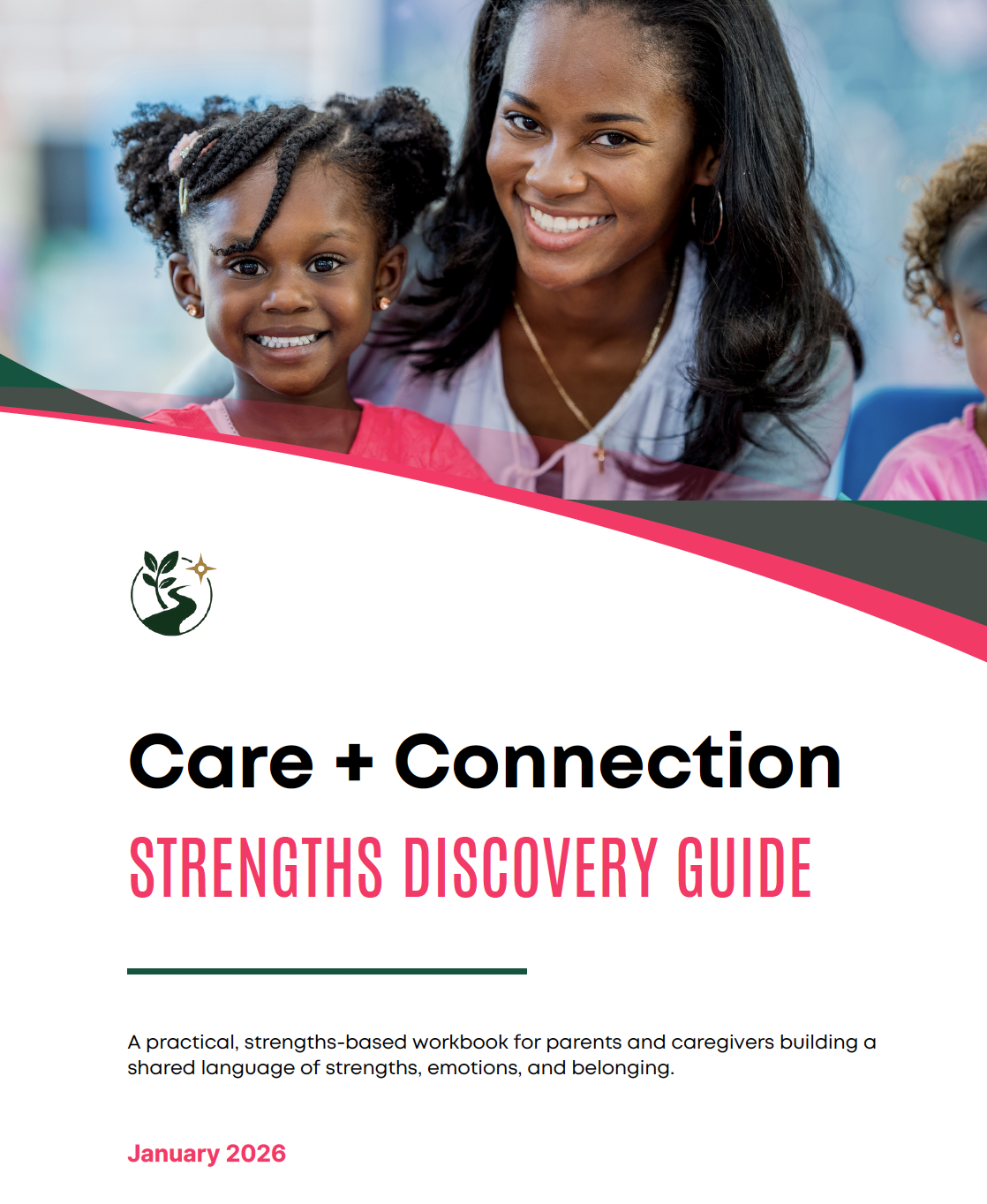
Not sure how to support children with care and confidence—without losing yourself in the process?
The Care + Connection: Strengths Discovery Guide is a self-directed, strengths-based workbook for parents and caregivers who want to build more intentional, connected, and sustainable home environments. Grounded in positive psychology and the VIA Character Strengths framework, the guide helps caregivers understand how their own strengths—and the strengths of the children they care for—shape daily interactions, emotional dynamics, and family life.
Rather than focusing on fixing behaviour or meeting external ideals of “good” caregiving, this guide invites a shift toward curiosity, awareness, and compassion. Through guided reflection and practical tools, caregivers learn to notice patterns, recognize strengths under stress, and respond in ways that strengthen connection while respecting capacity and boundaries.
The guide supports caregivers to:
Build a shared language of strengths, emotions, and values at home
Understand how caregiver and child strengths show up in ease and strain
Respond to challenges with greater clarity, balance, and care
Strengthen connection without sacrificing sustainability or self-care
Best for:
Parents, caregivers, foster and step parents, and educators seeking a strengths-based approach to caregiving, emotional development, and connection.
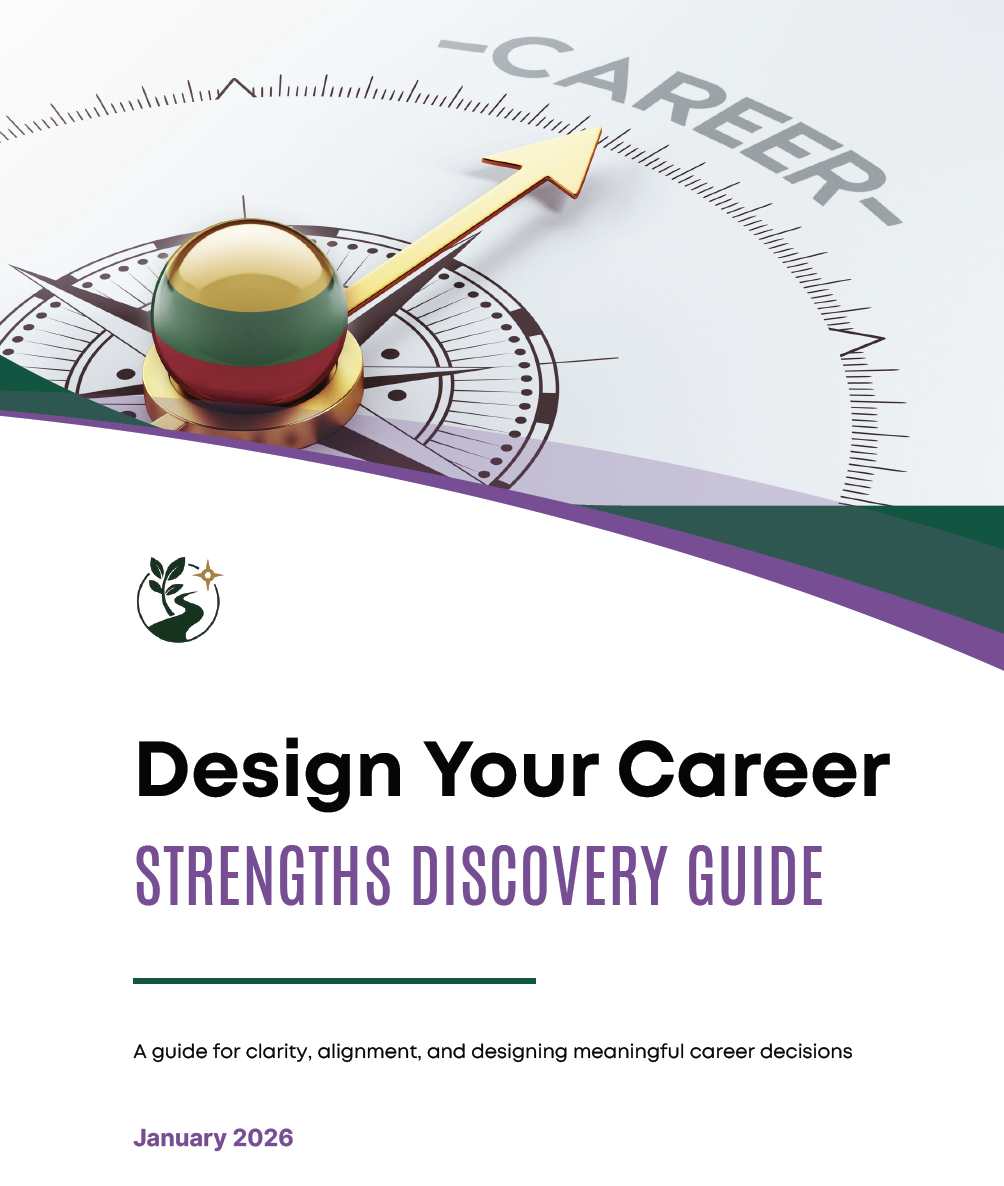
Not sure how to move forward in your career—or how to make decisions that actually feel aligned with who you are?
The Design Your Career: Strengths Discovery Guide is a self-directed, research-informed resource designed to help individuals explore career direction with clarity, confidence, and intention. Rather than starting with job titles or external expectations, this guide begins with what is already strong—your natural strengths, values, skills, and interests —and uses them as a foundation for meaningful career design.
Grounded in positive psychology, strengths-based development, and life design principles, the guide supports reflection on how you work best, what energizes you, and where your strengths are most likely to thrive. Through guided reflection, practical activities, and low-pressure career experiments, you’ll identify patterns, explore possibilities, and design next steps that feel both realistic and aligned.
This guide helps you:
Build clarity around your strengths, skills, and career patterns
Develop language to confidently articulate your value in resumes, interviews, and networking
Explore roles, environments, and career paths that feel energizing and meaningful
Apply a strengths-based lens to career exploration, transition, or role redesign
Move forward through curiosity, experimentation, and intentional choice—rather than pressure or perfection
Whether you’re exploring your first career, navigating a transition, considering a second or encore career, or looking to better align your current role, this guide offers a flexible, supportive framework for designing career decisions that fit who you are now.
Self-paced and intentionally adaptable, the guide can be used in one sitting or revisited over time as goals, roles, and priorities evolve. There is no single “right” outcome—only patterns to notice and possibilities to explore.
Best for:
Students, early-career professionals, career transitioners, and experienced professionals seeking greater alignment and direction. Also well-suited for educators, coaches, facilitators, and organizations using strengths-based approaches to career development, employability, or life design.
No results found
No results match your search. Try removing a few filters.